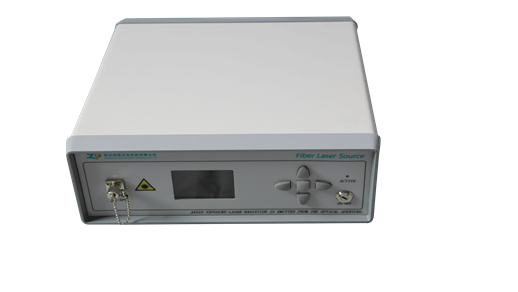
Definition
The 780nm ultra-fast laser utilizes the latest picosecond laser technology and optical frequency doubling technology to achieve stable output of picosecond pulsed laser light in the 780nm band.
Feature
Narrow pulse width
High peak pulse power
Completely self-starting
Stable and maintenance-free
Fully polarization-maintaining
Application
Multi-photon excitation imaging
Two-photon absorption
Ultra-fast lasers
Specification
Parameter | Unit | Type | Note |
Central wavelength | nm | 780±10 |
|
Spectral width | nm | <5 |
|
Pulse width | ps | <10 | Customize |
Output power | mW | >200 | Customize |
Power instability | - | < ±1% | @6hours |
Repetition frequency | MHz | 80~100 | Customize |
Repetition frequency instability | Hz | <100 | @1hour |
Single pulse energy | nJ | >2.5 |
|
Polarization state | - | Linear polarization |
|
Output mode | - | Space light |
|
Warm-up time | min | <1 |
|
Electrical parameter
Parameter | Spec |
Control method | Touchscreen /RS232 |
Synchronous signal interface | SMA |
Power supply | AC 100~240V , 30W |
Size or code | B4: 300(W)×398(D)×112.5(H)mm |
Operating temperature | 5 ~ 35°C |
Operating humidity | 0~70% |
Ordering info
ZG | CWL(nm) | Pulse width(fs) | Power(mW) | Repetition frequency (MHz) | Output | Package |
775/780 | 50/100 | 50/100/200 | 80/100 | FS=free space light | Benchtop |

 joe@zg-photonics.com
 0816 - 2384466